
Cost of Oil Tank Replacement in Springfield, MA: Complete Homeowner's Guide
The cost of oil tank replacement in Springfield, MA depends on the size and type of heating oil tank you choose, where your existing tank is located, and the labor required for removal and installation. Replacing a basement oil tank may involve different expenses than replacing an accessible outdoor tank, even when the equipment is similar.
At Ace Oil Tank Replacement, we help Springfield homeowners explore residential heating oil tank replacement options, including Granby steel tanks and Roth double-wall systems.
Understanding the complete replacement cost can help you compare estimates, prepare your budget, and avoid overlooking essential work such as fuel handling, tank removal, piping, and disposal.
Need an oil tank replacement estimate in Springfield?
Call
413-241-6720 or
request a free quote from Ace Oil Tank Replacement.
Get a free quote
Cost Of Oil Tank Replacement Springfield MA
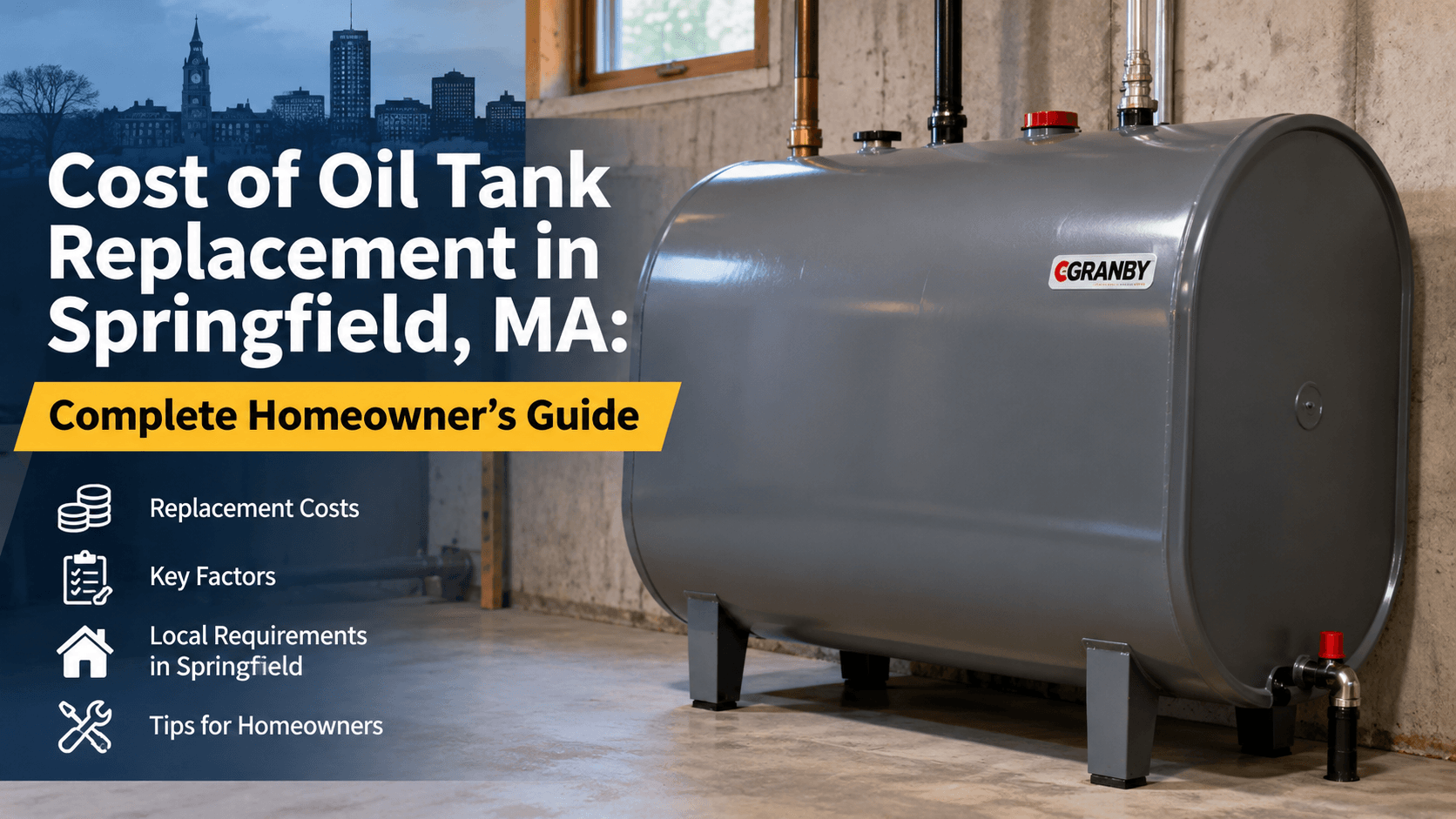
How Much Does It Cost to Replace an Oil Tank in Springfield, MA?
There is no single oil tank replacement price that applies to every property in Springfield.
The final cost depends on the equipment selected, the condition of the existing tank, and the work required to install the replacement.
For example, replacing an easily accessible above-ground tank may involve less removal labor than replacing an aging tank in a basement with narrow stairs or restricted entry.
Similarly, a project requiring new fuel piping or changes to the installation area can cost more than one where compatible connections can remain in place.
A written estimate based on your property's requirements provides the most accurate basis for budgeting.
Oil Tank Replacement Cost Breakdown
The following table explains the major components of a typical residential above-ground heating oil tank replacement project.
| Cost component | What affects the final price |
|---|---|
| New heating oil tank | Capacity, manufacturer, model, and construction |
| Old tank removal | Tank condition, location, remaining oil, and accessibility |
| Installation labor | Complexity of positioning, connecting, and securing the tank |
| Fuel handling | Managing remaining heating oil and any unsuitable residue |
| Piping and fittings | Condition and compatibility of existing connections |
| Tank supports | Appropriate legs, bases, or manufacturer-specified supports |
| Transportation and disposal | Handling and disposing of the old tank |
| Permits and inspections | Applicable local requirements |
| Additional work | Site preparation, unexpected damage, or necessary modifications |
Not every replacement requires every item listed above.
Before selecting a contractor, confirm whether the proposed price includes the complete project or only the new tank and installation labor.
7 Factors That Affect Oil Tank Replacement Costs in Springfield
Understanding the factors behind replacement pricing can help homeowners compare estimates and make informed decisions.
1. Heating Oil Tank Size
Tank capacity influences equipment selection, dimensions, and installation requirements.
Common residential heating oil tank sizes include 275-gallon and 330-gallon configurations.
Larger tanks may require additional space or handling, but the final installation price also depends on the property's conditions.
Before choosing a tank, consider your household's heating oil usage, available installation space, and the manufacturer's specifications.
A larger tank is not automatically the best choice for every home.
2. Single-Wall vs. Double-Wall Oil Tanks
The construction of your replacement tank can significantly influence equipment costs.
Traditional steel tanks and double-wall systems have different designs, accessories, and installation requirements.
A double-wall system incorporates secondary containment, which provides an additional containment layer if the primary tank develops a leak.
When comparing options, consider:
- Tank construction
- Available capacity
- Dimensions
- Suitable installation locations
- Required accessories
- Manufacturer warranty
- Total installed cost
The right choice depends on your property and budget, not simply the equipment's purchase price.
3. Basement Oil Tank Replacement
Basement tank replacement is common in homes that use heating oil.
However, installation conditions can vary significantly between properties.
Some Springfield basements have convenient utility access, while others have narrow stairways, low ceilings, finished walls, or other restrictions.
These conditions may increase the labor required to remove an old tank and bring in replacement equipment.
Before providing a final estimate, the contractor should evaluate the tank's location and available access.
4. Outdoor Oil Tank Replacement
Outdoor heating oil tanks face different conditions than indoor systems.
Massachusetts weather can expose exterior tanks to rain, snow, ice, and temperature changes.
The replacement must be suitable for outdoor installation and positioned according to applicable requirements and manufacturer specifications.
Additional work may involve stable supports, piping modifications, or preparation of the installation area.
An outdoor installation is not automatically cheaper than a basement replacement.
5. Old Oil Tank Removal and Disposal
Removing the existing tank is often an important part of the replacement project.
The work may involve handling remaining heating oil, disconnecting piping, preparing the tank for removal, moving it out of the property, and arranging appropriate disposal.
If access is restricted or the tank is severely deteriorated, additional preparation may be necessary.
For homeowners who only need an unwanted tank removed, see our oil tank removal services in Springfield, MA.
6. Fuel Lines, Valves, and Other Components
The existing heating oil system may contain components that require evaluation or replacement.
These can include:
- Fuel supply lines
- Fill and vent pipes
- Valves and fittings
- Tank gauges
- Supports and connections
Some components may remain suitable for use with the new tank, while others may need modification.
Ask your installer which materials are included in the quotation.
7. Permits, Inspections, and Property Conditions
Applicable requirements can affect the scope and cost of replacing a heating oil tank.
Permit and inspection requirements may depend on the equipment, installation location, and work being performed.
The contractor should confirm applicable requirements with the relevant Springfield authorities.
If there is evidence of an oil leak or contaminated soil, additional assessment and environmental work may be necessary.
Such circumstances should be evaluated separately from a routine tank replacement estimate.
275-Gallon Oil Tank Replacement Cost in Springfield, MA
A 275-gallon heating oil tank is a common residential configuration.
However, the price of the equipment alone is not the same as the complete replacement cost.
Two homeowners selecting the same tank may receive different estimates because their properties require different amounts of labor or additional materials.
Tank-Only Price vs. Installed Replacement Price
Tank-only price: The purchase price of the selected equipment, which may exclude accessories, delivery, and labor.
Installation price: The cost of placing, connecting, and preparing the new tank for use, including agreed materials and labor.
Complete replacement price: The cost of installing the new tank plus the removal and disposal of the old equipment and other necessary work.
When comparing estimates, confirm which of these figures the contractor is providing.
A lower equipment price does not necessarily mean the total project will be less expensive.
Granby Steel vs. Roth Double-Wall Oil Tanks
Ace Oil Tank Replacement offers information about both Granby steel and Roth double-wall tank options.
These systems differ in construction and installation requirements.
Granby Steel Oil Tanks
Granby manufactures residential heating oil storage tanks in different configurations.
Traditional steel tanks may be suitable for installations where the selected model meets the property's requirements.
Homeowners should compare capacity, dimensions, accessories, installation conditions, and manufacturer warranty information.
Roth Double-Wall Oil Tanks
Roth double-wall tank systems incorporate a primary storage tank and secondary containment.
Their design differs from traditional single-wall steel systems.
The total installed cost may vary based on the selected model, required accessories, existing connections, and site conditions.
Which Tank Offers Better Value?
| Consideration | Traditional steel tank | Roth double-wall tank |
|---|---|---|
| Construction | Depends on the selected steel model | Double-wall construction |
| Secondary containment | Depends on the model and installation | Incorporated into the tank system |
| Capacity options Installation space | Vary by model Model-specific | Vary by model Model-specific |
| Accessories | Based on manufacturer specifications | Based on manufacturer specifications |
| Purchase price | Depends on equipment selected | Depends on equipment selected |
| Warranty | Manufacturer-specific | Manufacturer-specific |
Ask for complete installed quotations for both options before deciding.
The most appropriate tank is one that meets your home's installation requirements and provides suitable features for your budget.
Does Oil Tank Replacement Include Removal of the Old Tank?
Oil tank replacement and oil tank removal are related but separate parts of a project.
A complete replacement typically involves installing a new tank, while removal involves taking the existing tank out of service and physically removing it.
Some estimates combine these services, while others list them separately.
Before authorizing work, ask whether the proposed price includes:
- Managing remaining heating oil
- Disconnecting the existing tank
- Removing the old equipment
- Transportation and disposal
- Preparing the installation area
- Installing and connecting the new tank
- Appropriate testing and final checks
This helps prevent misunderstandings about the total project cost.
When Should You Replace an Aging Heating Oil Tank?
Homeowners should consider a professional assessment when a tank shows signs of deterioration or has an uncertain maintenance history.
Warning signs may include:
- Visible rust or corrosion
- Oil stains or unexplained fuel odors
- Damage around seams or fittings
- Unstable tank legs or supports
- Evidence of leakage
- Deteriorating connected components
An older tank does not automatically require immediate replacement.
Its condition depends on the equipment, installation environment, and maintenance history.
If you suspect an active heating oil leak, do not move, drain, or attempt to repair the tank yourself. Contact a qualified professional promptly and follow applicable reporting requirements.
How to Compare Oil Tank Replacement Quotes in Springfield
Obtaining written estimates can help homeowners understand the differences between equipment and installation proposals.
Before choosing a replacement provider, ask the following questions.
What Tank Is Included?
Request the manufacturer, model, capacity, and construction type.
This helps you compare equivalent equipment.
Does the Price Include Old Tank Removal?
Confirm whether fuel handling, disconnection, removal, and disposal are included.
Are New Piping and Fittings Included?
Ask whether the estimate covers necessary connections, valves, supports, and other installation materials.
What Additional Charges Are Possible?
Find out whether restricted access, damaged components, or additional site preparation could increase the price.
Are Permits and Inspections Included?
Ask who is responsible for determining and arranging applicable approvals.
What Warranty Applies?
Review the selected tank's manufacturer warranty and any applicable workmanship warranty.
Is the Estimate Itemized?
A clear written estimate should identify the proposed equipment, installation scope, and important exclusions.
For information about the service process itself, visit our oil tank replacement service page in Springfield, MA.
How to Prepare for an Oil Tank Replacement Estimate
Before requesting an estimate, gather basic information about your existing heating oil system.
Useful details include:
- Property location in Springfield
- Approximate tank capacity
- Basement, garage, or outdoor installation
- Visible signs of damage
- Available access to the tank
- Existing fuel connections
- Preferred replacement tank type
- Known installation or maintenance history
Photographs of the tank and surrounding area may help during an initial discussion, provided they can be taken safely.
A professional assessment may still be necessary before the final price is confirmed.
Frequently Asked Questions About Oil Tank Replacement Cost
How much does oil tank replacement cost in Springfield, MA?
The cost depends on the tank model, size, location, removal requirements, labor, and additional installation materials. A written estimate based on your property is the best way to determine the expected expense.
How much does it cost to replace a 275-gallon oil tank?
The complete replacement price depends on the selected equipment, accessibility, existing piping, and removal requirements. Tank-only prices should not be confused with the total installed project cost.
Is basement oil tank replacement more expensive?
It can be if access is restricted or additional labor is necessary. However, some basement replacements are straightforward, while outdoor installations may require extra preparation.
Are Roth oil tanks more expensive than steel tanks?
Roth double-wall systems may have a higher equipment cost than some traditional steel tanks. Compare complete installation estimates and product specifications before deciding.
Does the replacement estimate include disposal?
Not necessarily. Confirm whether the quotation includes transportation and disposal of the existing tank and management of remaining heating oil.
Can I reuse the existing oil lines?
Existing connections may be reusable when their condition, specifications, and compatibility are appropriate. A qualified installation professional should evaluate them.
Do I need a permit for oil tank replacement in Springfield?
Requirements depend on the scope of work and applicable local rules. Confirm permit and inspection requirements with the relevant authority and the installation contractor.
How long does oil tank replacement take?
The timeline depends on access, the condition of the existing equipment, the replacement tank selected, and any additional work. Ask your contractor for a project-specific schedule.
Is oil tank replacement covered by homeowners insurance?
Coverage depends on your policy and the circumstances. Routine replacement due to aging or wear is generally different from damage caused by an insured event. Contact your insurer to confirm coverage.
How can I get a free oil tank replacement estimate in Springfield?
Call Ace Oil Tank Replacement at 413-241-6720 or use the company's online contact form. Provide information about your existing tank and the work you need.
Request Your Oil Tank Replacement Estimate in Springfield, MA
Planning an oil tank replacement is easier when you understand the equipment, removal requirements, and installation work involved.
Whether you're replacing a 275-gallon basement tank, comparing Granby and Roth options, or preparing to remove an aging above-ground tank, an itemized estimate can help you make an informed decision.
Ace Oil Tank Replacement serves homeowners seeking heating oil tank replacement and removal solutions in Springfield, Massachusetts.
Call 413-241-6720
Request Your Free Oil Tank Replacement Quote
Tell us about your existing tank and the replacement options you're considering.